


Adeegso tilmaantan si aad u carrabbaabdo ama ugu samayso link qoraalkan
http://hdl.handle.net/2307/5432| Bed DC | Qiimo | Luqad |
|---|---|---|
| dc.date.accessioned | 2016-11-14T08:45:26Z | - |
| dc.date.available | 2016-11-14T08:45:26Z | - |
| dc.date.issued | 2016-11-14 | - |
| dc.identifier.uri | http://hdl.handle.net/2307/5432 | - |
| dc.description | Image taken from the website "Mogadishu: Images from the past" (https://mogadishuimages.wordpress.com/) and included in the Somali Archive with the permission of the owner of the collection, Mr. Davies. | it_IT |
| dc.description | Sawir laga soo qaatay mareegta "Mogadishu: Images from the past" (https://mogadishuimages.wordpress.com/), waxaana lagu biiriyay Kaydka Soomaaliya, kaddib markii oggolaasho laga helay qofka diyaariyay oo ah Rick Davies. | it_IT |
| dc.description | Immagine tratta dal sito "Mogadishu: Images from the past" (https://mogadishuimages.wordpress.com/) e inclusa nell'Archivio Somalia con il consenso del curatore della collezione Rick Davies. | it_IT |
| dc.subject | Xamar Weyne | it_IT |
| dc.subject | weaving | it_IT |
| dc.subject | Xamar Weyne | it_IT |
| dc.subject | farsamada sameynta dharka | it_IT |
| dc.subject | Xamar Weyne | it_IT |
| dc.subject | tessitura | it_IT |
| dc.title | Hand weavers of Mogadishu cloth | it_IT |
| dc.type | Image | it_IT |
| dc.relation.altloc | Originale conservato presso il Centro studi Somali : http://host.uniroma3.it/centri/CentroStudiSomali/index.php | |
| dc.description.subject | Possibly in Xamar Weyne, where weaving like this continued until the 1980s. Traditionally done by the slave section of the Xamar population, known as (h)abash or adoon. The text is from “The Politics of Dress in Somali Culture” By Heather Marie Akou, 2011. | it_IT |
| dc.description.subject | Waxay u badantahay in ay tahay Xamar Weyne, meel sidaan oo kale lagu sameeynaayay dharka ilaa 80meeyadii. Farsamada sameynta dharka, dhaqan ahaan, waxay ahayd shaqo ay qaban jireen dadka reer Xamar ee la addoonsan jiray, oo loo yiqiin "xabash" ama "addoon". Raadraaca qoraalkan waxaa laga helay: "The Politics of Dress in Somali Culture", oo qortay Heather Marie Akou, 2011. | it_IT |
| dc.description.subject | Probabilmente in Xamar Weyne, dove tessiture come queste hanno continuato ad esistere fino al 1980. Tradizionalmente realizzate dalla sezione della popolazione Xamar in schiavitù, conosciuta come (h)abash o adoon. Il testo è tratto da “The Politics of Dress in Somali Culture” di Heather Marie Akou, 2011. | it_IT |
| dc.description.subject | Link: https://mogadishuimages.wordpress.com/2014/11/06/hand-weavers-of-mogadishu-cloth/ | it_IT |
| item.grantfulltext | open | - |
| item.fulltext | With Fulltext | - |
| Wuxuu ka dhex muuqdaa ururinnada: | Immagini - Sawirro - Images | |
Fayl ku dhex jira qoraalkan:
| Fayl | Sifayn | Baac | Fayl | |
|---|---|---|---|---|
| 028_Hand weavers of Mogadishu cloth_text.jpg | testo text | 101.51 kB | JPEG |  Muuji/fur |
| 028_Hand weavers of Mogadishu cloth.jpg | immagine image | 29.83 kB | JPEG | 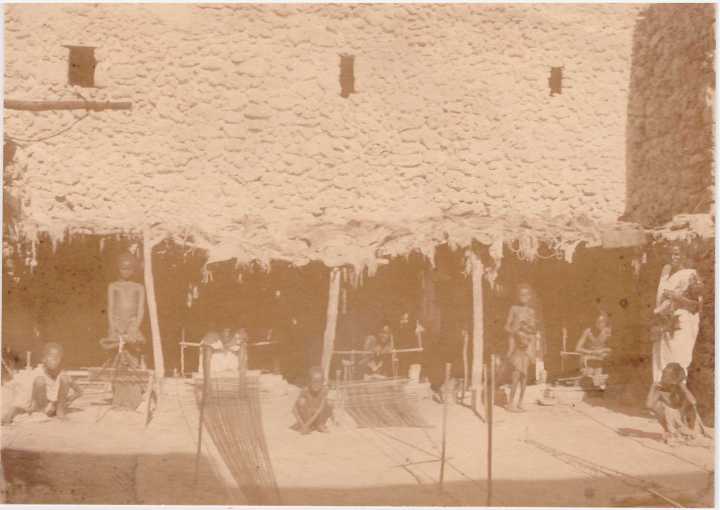 Muuji/fur |
Page view(s)
432
Last Week
0
0
Last month
3
3
checked on Oct 12, 2026
Download(s)
225
checked on Oct 12, 2026

Google ScholarTM
Check
Qoraalkan wuxuu u habaysanyahay si waafaqsan Ruqsada Creative Commons
